Why Bringing a Dog Into a School Is Not Enough
Dogs can be powerful partners in education. Research into animals in educational settings suggests that, when thoughtfully incorporated, dogs may support student engagement, motivation, social interaction, emotional regulation and readiness to learn.
For a young person who is anxious, disengaged or struggling to connect with adults, a dog can provide a shared focus and create a different pathway into participation.
However, simply bringing a friendly dog into a school is not the same as delivering a professional animal-assisted intervention. A student enjoying time with a dog tells us they are engaged, but it doesn’t necessarily tell us that learning has occurred. Professional animal-assisted education has a purpose. The mentor needs to understand what the young person is working towards and how interaction with the dog can meaningfully support that goal.
This is where dogs can provide some extraordinary learning opportunities. Through carefully facilitated interactions, young people can explore communication, empathy, boundaries, consent, emotional regulation and perspective-taking in a very practical way. A dog choosing to move away, for example, can create a conversation about recognising another individual’s communication and respecting their boundaries. Rather than simply explaining these concepts, mentors can help students experience and practise them.
At the same time, we need to be careful not to overstate what dogs can do. Research into animal-assisted education is promising but still developing, and positive changes cannot always be attributed solely to the dog. The mentor relationship, individual attention, group size, environment and novelty of the experience may all contribute. Being evidence-informed means being enthusiastic about the possibilities while remaining curious and careful about the conclusions we draw.
Professional practice also recognises that dogs are not beneficial for every student. Some young people may be frightened of dogs, have allergies or sensory considerations, become highly excited around animals, or simply prefer not to interact. Participation should involve genuine choice, and the intervention should adapt to the young person rather than expecting every young person to adapt to the presence of a dog.
Just as importantly, the dog’s welfare matters too. Our dogs are not therapeutic equipment; they are living participants in the work. Schools can be challenging environments, with noise, movement, unfamiliar people and unpredictable interactions. Mentors must understand canine behaviour, recognise early signs of discomfort or fatigue, provide appropriate breaks and be prepared to change or stop an interaction when their dog needs them to.
This is why professionalism in animal-assisted education matters. Loving dogs and wanting to help young people are wonderful starting points, but professional practice requires much more. It requires knowledge of animal behaviour and welfare, child safety, education, risk management, professional boundaries and reflective practice. It also requires mentors to continually ask whether an activity is genuinely benefiting the young person and whether their dog is comfortable participating.
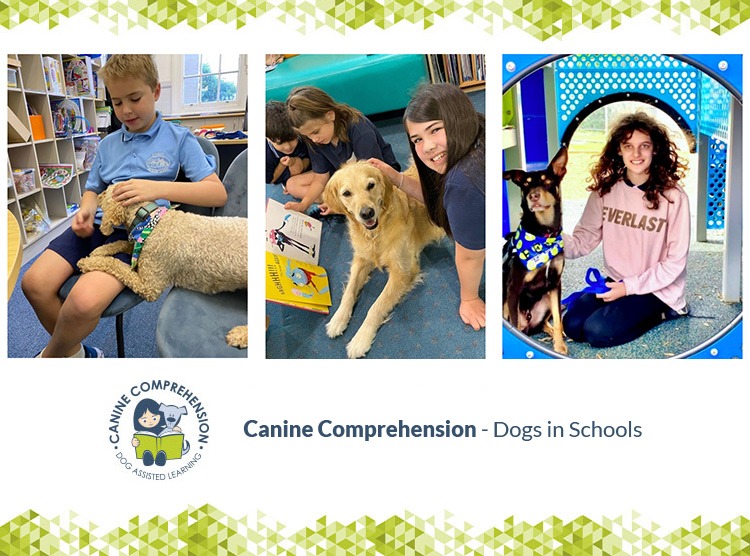
At Canine Comprehension, our goal isn’t simply to put more dogs into schools. We want to contribute to better animal-assisted practice in schools: practice that is purposeful, evidence-informed, child-safe, ethical and animal-welfare-led. The value isn’t simply having a dog in the room. It comes from a skilled professional knowing how to thoughtfully facilitate the relationship between a young person and a dog, while keeping the wellbeing of both at the centre.