More Than a Mentor: Why Role Modelling Matters
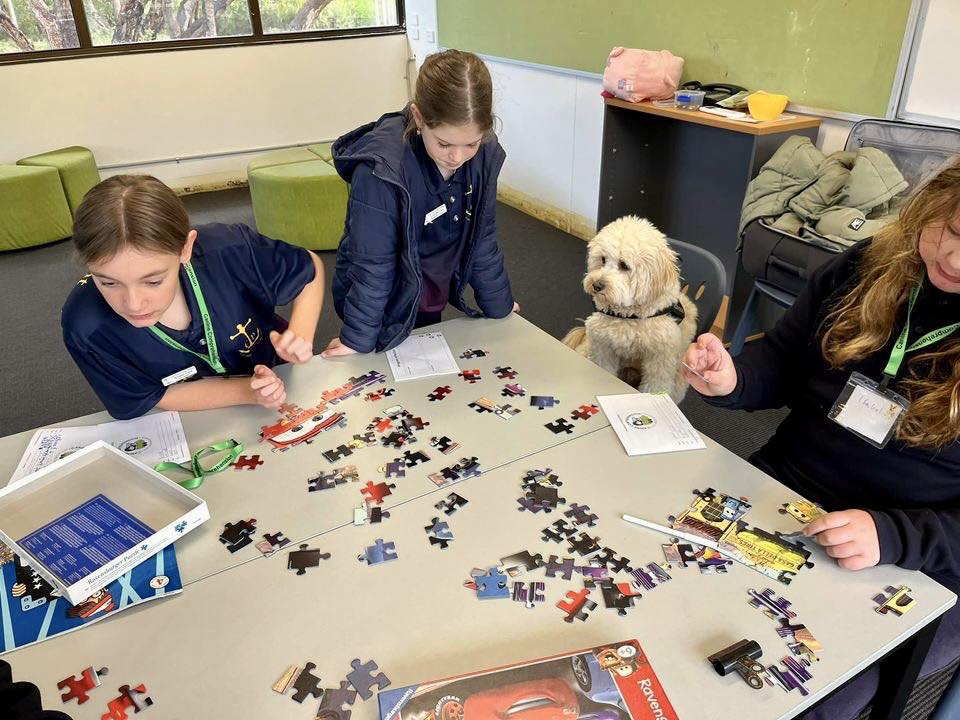
When a young person spends time with a Canine Comprehension mentor and their therapy dog, learning is happening in more ways than we might realise.
Of course, there are the planned activities, conversations and learning objectives, but young people are also observing the adult in front of them. They notice how we speak to people, how we respond when something goes wrong, whether we genuinely listen, how we manage frustration and how we treat our dogs. They notice whether we are fair, whether we keep our word and whether the values we talk about are reflected in the way we actually behave.
This is why role modelling is such an important part of mentoring at Canine Comprehension. We can teach young people about empathy, communication, emotional regulation, adaptability and respect, but those lessons become considerably more powerful when students see those qualities demonstrated by the adults around them.
Young People Learn From What We Do
There can sometimes be a difference between the lesson an adult intends to teach and the lesson their behaviour actually communicates. We might tell a young person that mistakes are part of learning, for example, but if they then see us become defensive or embarrassed when we make a mistake ourselves, they receive a very different message. Likewise, we can talk about respectful communication, but young people will also notice whether we interrupt them, dismiss their ideas or genuinely make space for them to speak.
Research into teachers as role models highlights the influence educators can have on both the academic and personal development of young people. In one study of 300 students, 212 reported viewing their teacher as a role model. The research identified qualities including encouragement, clear communication, responsiveness to students and a willingness to continually improve as characteristics associated with positive educators.
For us, this reinforces an important principle: what a mentor does matters alongside what a mentor says.
Relationships Create the Foundation
Positive role modelling isn’t about an adult standing at the front of a room demonstrating the “correct” way to behave. It begins with relationship. Young people are much more likely to listen to and learn from adults they experience as safe, consistent and genuinely interested in them.
The research considered in our mentor training connects supportive teacher–student relationships with students’ sense of belonging and cooperative participation. It also highlights the importance of educators understanding students’ interests, preferences, opinions, cultures and emotions so that learning can be meaningful and relevant.
This closely reflects the way we approach mentoring at Canine Comprehension. Our mentors are encouraged to listen, remain curious and take time to understand the young person in front of them. Rapport isn’t about trying to make every student like us. It is about developing enough trust for learning, challenge, encouragement and honest conversation to occur while maintaining clear professional boundaries.
Our Dogs Make Important Skills Visible
Animal Assisted Therapy and Animal Assisted Education give us some particularly powerful opportunities for role modelling because interactions with our dogs can make abstract concepts visible. Communication, boundaries, empathy, emotional regulation and problem solving can all be demonstrated through the relationship between a mentor and their therapy dog.
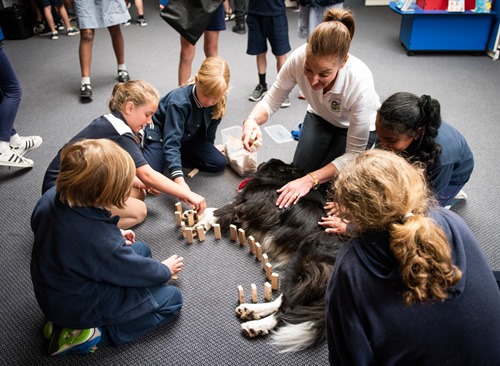
When a mentor notices their dog’s body language and gives them some space, a young person sees respect for boundaries in action. When an activity is changed because the dog is becoming tired, they see that another individual’s wellbeing matters more than simply completing the plan. When something doesn’t go as expected and the mentor responds calmly rather than becoming frustrated with the dog, students see emotional regulation and adaptability being demonstrated rather than simply discussed.
Our mentors can also make some of this thinking explicit. A mentor might explain that they have noticed their dog turning away or seeking space and are therefore going to give them a break. In a very ordinary interaction, the student is seeing observation, communication, empathy and respect for another individual’s needs.
Being a Role Model Doesn’t Mean Being Perfect
Being a positive role model does not require pretending to be a flawless adult who always knows the answer. In fact, some of the most useful role modelling can happen when things don’t go according to plan.
A mentor might realise that they haven’t explained an activity very clearly and simply acknowledge it before trying another way. An activity might fall flat and the mentor may decide to change direction rather than blaming the group. A mentor might misunderstand something a student has said, recognise their mistake and apologise. These moments demonstrate accountability, adaptability and self-awareness.
The research used within our mentor training identifies defensiveness and failure to accept responsibility among behaviours associated with ineffective teaching, while continual improvement, responsiveness and clear communication are identified among positive characteristics. This is one reason reflective practice is so important within our approach. We want mentors to think about what worked, what didn’t, what a young person may have experienced and what they might change next time.
Fairness Doesn’t Always Mean Treating Everyone the Same
Young people pay attention to fairness and consistency, but an inclusive learning environment doesn’t require every student to receive exactly the same thing. Different young people may need different forms of support to participate successfully.
One student might need additional processing time, while another may benefit from movement. Someone may need instructions presented differently, and another young person may initially prefer to observe the therapy dog rather than interact directly. A student who has struggled in traditional learning environments may need considerably more time before they feel comfortable participating.
Our mentors can adapt their approach without lowering their expectations of the young person or their respect for them. The aim isn’t to make every learner fit one way of participating. It is to create enough safety, flexibility and connection for different young people to find meaningful ways into the learning.
The Small Moments Can Teach Big Lessons
When we think about education, it is easy to focus on curriculum, activities and measurable outcomes. These things matter enormously, but the everyday interactions surrounding that learning matter too. Research used within our mentor training has associated positive role models with qualities including encouragement, enthusiasm for learning, commitment, consistency, fairness, problem solving, mentoring and positive attitudes towards students.
At Canine Comprehension, our mentors aren’t simply delivering activities with a therapy dog beside them. They are building relationships and creating experiences through which young people can practise confidence, communication, empathy, adaptability and connection. Every interaction provides an opportunity to demonstrate the values we hope young people will develop for themselves.
Sometimes the most powerful lesson of a session won’t be the one written in the lesson plan. It may be watching an adult listen carefully when they have something to say, seeing a mentor respect a dog’s request for space, experiencing fairness when they are having a difficult day or watching someone calmly acknowledge a mistake and try again.
That is the responsibility and opportunity that comes with being a mentor. What we model matters just as much as what we teach.