Why the Chelsea Watego keynote is a voice we all need to hear
At a recent conference I attended, there were plenty of polished presentations, clever phrases and big ideas. But one speaker cut through all of that and went straight to something deeper: our shared humanity.
Professor Chelsea Watego’s presentation was powerful, confronting and deeply moving.
She did not speak to impress the room. She spoke with clarity, conviction and truth. In doing that, she created the kind of silence that tells you people are not just listening, they are being changed by what they are hearing.
What stayed with me most was her ability to bring the conversation back to people, not performance. Back to needs, not noise. Back to the real cost of the systems, language and assumptions that shape how children and young people are seen. Her slides challenged the idea of race as something biological and instead named it as a social construction made real through systems, structures and beliefs. It was not abstract. It was immediate, human and impossible to ignore.
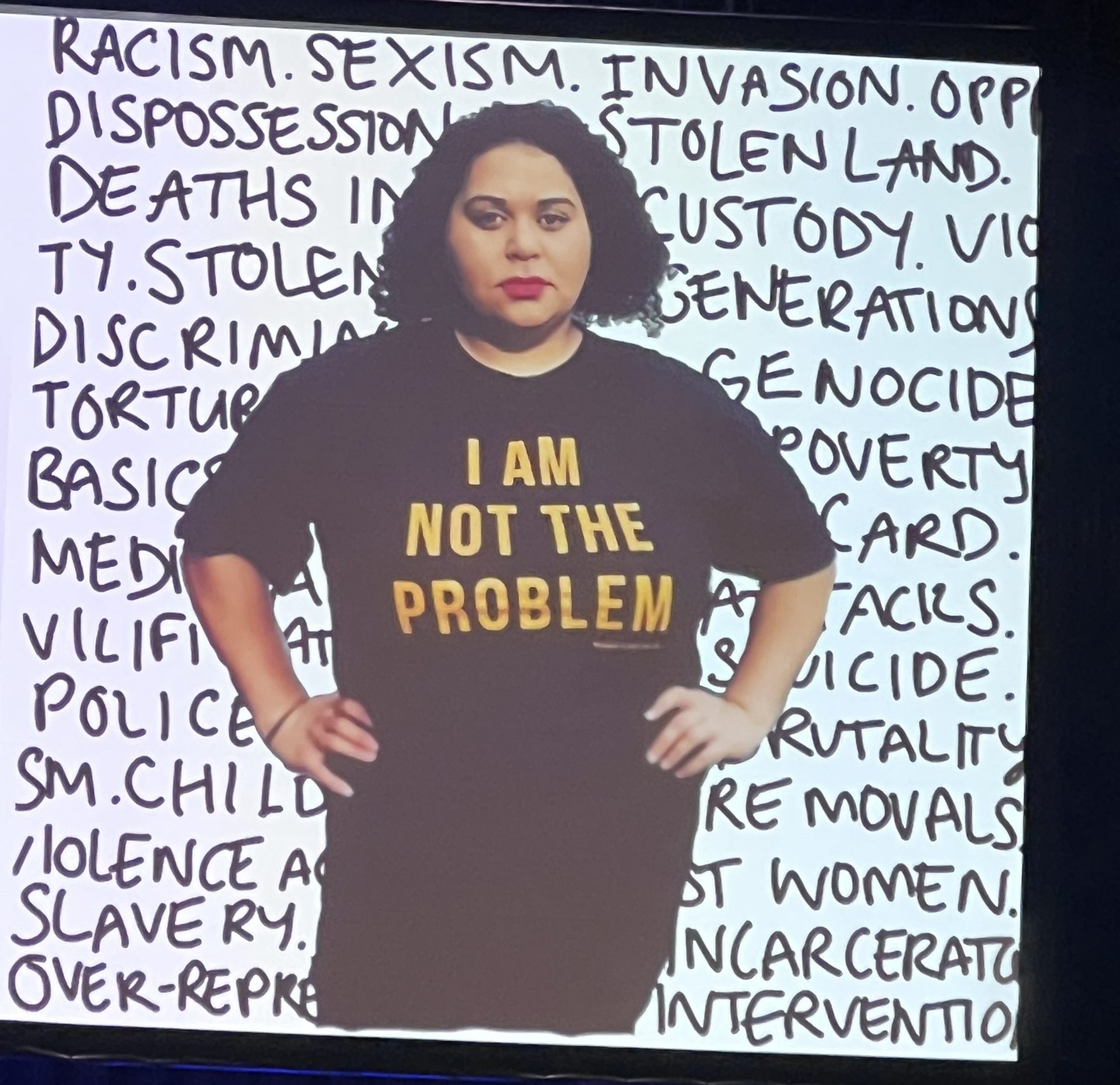
One image simply read, “I am not the problem.”
That landed heavily. It captured something many children know in their bodies long before adults know how to name it. When a child is labelled, misunderstood or treated as less than, the damage is not only personal. It is systemic.
Another part of the keynote that stayed with me was the strength and pride in Indigenous knowing. Not as something historical or symbolic, but as living, embodied and essential to real-world change. That matters. It reminds us that wisdom does not only sit in institutions, policies or professional titles. It also lives in community, culture, memory and relationship.
As someone working with children and young people, I left thinking about the students who are too quickly framed as difficult, disengaged or unlikely to succeed. The ones who are often carrying far more than we can see. The ones who do not need to be fixed, but understood.
That is what made this keynote so impactful. It did not ask the audience to feel inspired and move on. It asked us to think more carefully about the stories we accept, the systems we uphold and the responsibility we carry when we work with young people.
For me, it was a reminder that meaningful work starts with seeing people clearly. With questioning what we have been taught. With making room for truth, even when it is uncomfortable.
And most of all, it was a reminder that when someone speaks with courage, clarity and humanity, their voice does more than fill a room. It changes it.