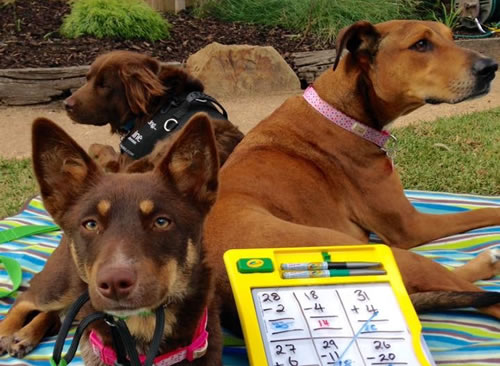
What young people need from us is bigger than what school has become. How dog-assisted learning can help.
Every now and then, you hear someone speak and it puts words to something you’ve been feeling for a long time.
That’s how I felt listening to Pasi Sahlberg speak about reinventing Australian schools. I walked away feeling deeply moved, but also strangely reassured. Not because the data was comforting — it wasn’t — but because it confirmed something many of us working with young people already know: what we are doing is not working well enough for too many children.
We have spent years asking young people to fit into systems that have barely changed, even as their needs, the world around them, and the pressures on them have changed dramatically. And yet the evidence keeps telling us the same thing. Across the Western world, learning outcomes have shown little meaningful improvement over time, despite increased spending on schooling. At the same time, student wellbeing, mental health, engagement, equity, and creativity have all come under strain. The achievement gap between students experiencing advantage and those facing disadvantage has not meaningfully closed. In many cases, it has stayed the same or widened.
That should stop us in our tracks.
Because if we are honest, it means we cannot keep doing what we have always done and call it enough. We cannot keep asking children to adapt to systems that are not meeting their developmental, emotional, and relational needs, then wonder why so many are struggling to engage, regulate, belong, or thrive.
One of the strongest messages for me was the reminder that children need time and space to play, to be outdoors, and to discover themselves and their environment at their own pace. Not as a reward. Not as an optional extra. As a core part of healthy development.
Over time, children’s opportunities for free play, outdoor exploration, and independence have steadily declined. At the same time, screen time and adult-directed structure have increased. Research has linked this loss of play and autonomy with poorer mental health, reduced resilience, behavioural challenges, lower self-control, and increased distress. That matters, because play is not separate from learning. It is one of the ways children learn best. It is how they test ideas, build confidence, solve problems, take manageable risks, and make sense of the world around them.
I think sometimes we underestimate children. We rush them. We over-structure them. We fill every gap. But young people have such a strong capacity to grow when they are given the right conditions. They need meaningful relationships. They need safety. They need belonging. They need room to be curious. They need opportunities to contribute. And they need adults who are willing to ask not just, “How do we make this child comply?” but, “What does this young person need in order to feel safe enough to learn?”.
That question sits at the heart of what we do at Canine Comprehension.
How dog-assisted learning helps children feel safe, connected, and ready to learn
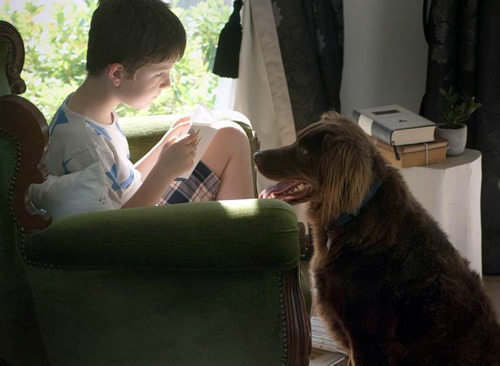
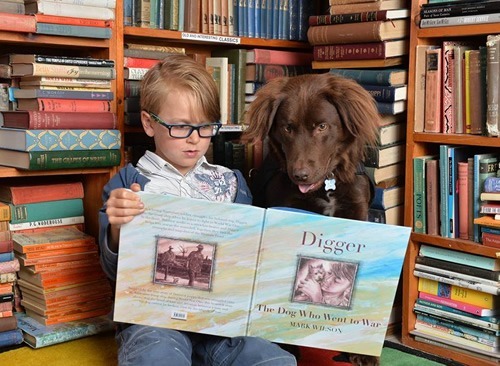
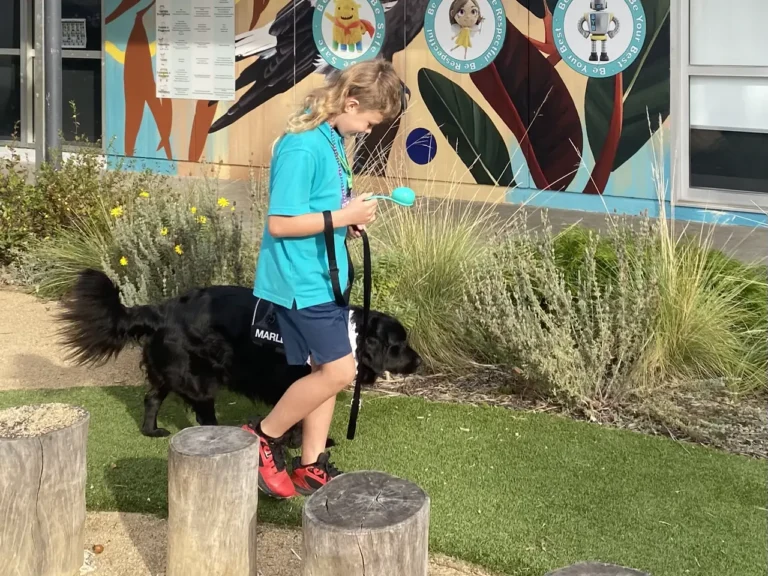
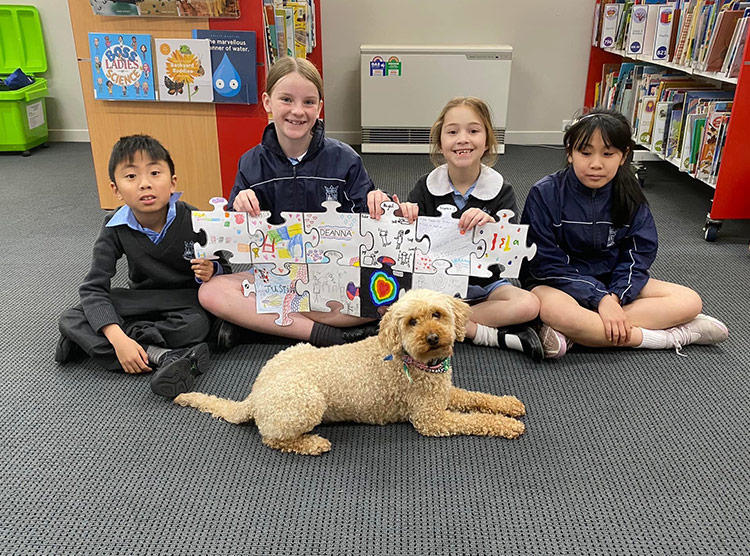
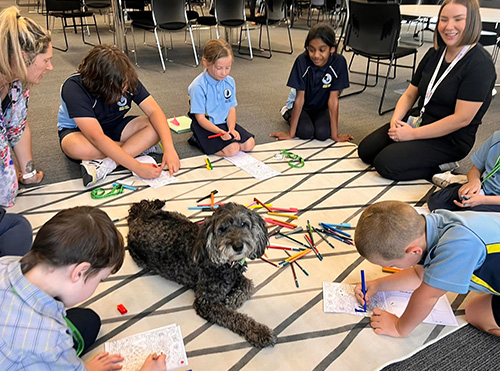
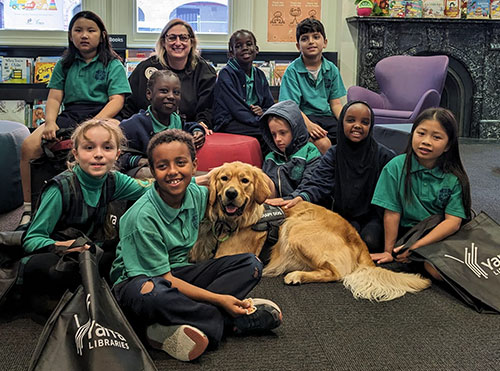
Our work has always been about more than delivering content. It is about creating the conditions where learning can happen. Through dog-assisted learning, we support young people to feel calmer, safer, more connected, and more open to engagement. We see every day that when pressure comes down, connection goes up. When a child feels emotionally safe, they are more able to participate, communicate, reflect, and take positive steps forward.
The therapy dogs are an important part of that, but they are not the whole story. The real work is in the relationships, the pacing, the trust, and the way we create experiences that meet young people where they are. We give them space to build confidence. We help them reconnect with learning in a way that feels positive, relational, and possible. For some children, that can be the beginning of a completely different experience of school.
This is why I keep coming back to the idea that wellbeing and learning cannot be separated. If a child does not feel safe, understood, or connected, learning becomes harder. If a child is constantly dysregulated, overlooked, or pressured to perform in ways that do not match their developmental needs, we should not be surprised when they disengage. But when we create environments that support regulation, trust, play, movement, and connection, we give young people a much better chance to thrive.
We need to be willing to rethink what education is for and what children actually need from the adults and systems around them. Not in a token way. Not in a surface-level wellbeing initiative layered on top of the same old structure. Real change.
Because the evidence is there. The need is there. And our young people are telling us, in so many different ways, that they need something more human, more responsive, and more hopeful than what many systems currently offer.
I believe children deserve that. I believe schools can be places where young people feel they belong, where learning feels possible, and where relationships matter. And I believe that if we listen carefully enough to the evidence, to the research, and to young people themselves we can help create something better.
References
The ideas and data discussed in this reflection were drawn from Sahlberg’s presentation, Reinventing Australian Schools: Purpose, possibility, and hope. The presentation brought together research, international datasets, and published reports to highlight long-term trends in student learning, wellbeing, equity, play, and school design. The references below relate to the sources cited or reflected in that presentation.
Sahlberg, P. (2026, 17 March). Reinventing Australian Schools: Purpose, possibility, and hope.
OECD. (2018). Education data and analysis referenced in the presentation, including findings that learning outcomes across the Western world have shown little improvement despite increased spending on schooling.
Sahlberg, P., & Doyle, W. (2019). Let the Children Play: How More Play Will Save Our Schools and Help Children Thrive*. Oxford University Press.