
Advice to Other Women Entrepreneurs: Build With Clarity, Courage, and Systems
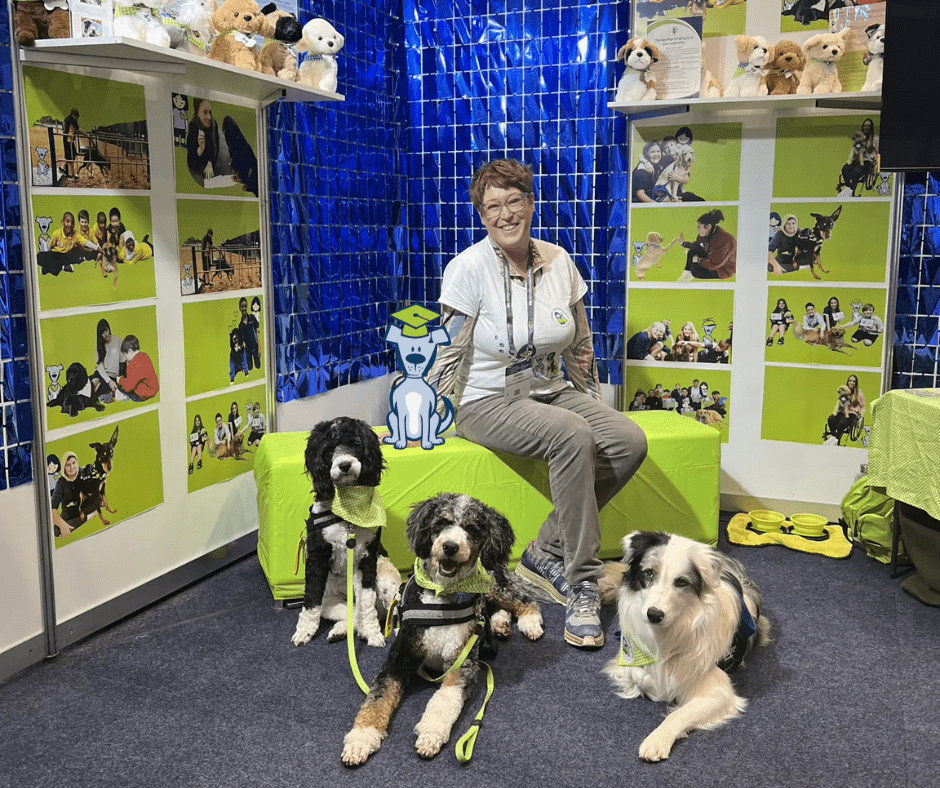
I was recently asked to nominate for the 8th International Women Entrepreneur Awards 2026 (Great Companies), and it prompted me to pause and reflect. The questions weren’t just about achievements. They were about leadership, resilience, and what I’ve learned along the way. After more than 10 years of operating Canine Comprehension, I’m sharing these thoughts for any aspiring or early-stage woman founder who’s building something meaningful.
When I started Canine Comprehension, it wasn’t because I had a perfect business plan. In fact, I had no business plan. No budget. No financial backing. Really, no clue, but I did have a vision! It began with a love of dogs, a background in teaching and curriculum design, and a very clear purpose: helping young people feel safe, settled, and ready to learn. That’s our “why”. It’s the reason we exist, the thing that guides decisions on tough days, and the thing we celebrate when we’re recognised for our work. Over time, that purpose grew into a bigger picture, our vision of a world where young people feel they belong at school, love learning, and look out for each other. And it shaped our mission too: we’re committed to empowering young people with the skills and tools that foster inner certainty, so they can confidently navigate the world. For us, that mission isn’t a poster on a wall. It’s what we do daily to move towards the vision.
If there’s one thing I’d tell other women entrepreneurs, it’s this: clarity beats comparison.
It’s easy to look sideways when you’re starting out, at competitors, bigger brands, or people who seem to be moving faster. But comparison creates noise, and noise makes decision-making harder. The truth is, people can copy what you do, your service, your structure, even your marketing, but they can’t copy who you are. They can’t copy your lived experience, your standards, the way you make people feel, or the values you’re willing to protect when it would be easier to compromise.
That’s why early on, the most helpful work you can do is getting clear on the problem you solve, who you solve it for, and what “good” looks like in real life. And just as importantly, get clear on what you stand for. At Canine Comprehension, our values have H.E.A.R.T.: Being Helpful, Empathetic, Adaptable, Reliable, and Trustworthy. Those values were there from the beginning, even before we had the cute acronym. They guide our conscious and unconscious behaviour, and whenever we’re unsure, we know we can find the answer within our values.
Clarity also helps you explain what makes you different without needing to shout about it. In our world, the most important thing is the children, who have often been let down in the past. Our dogs are the key to connection, but the true quality comes from our curriculum, experience, and the expertise of our team. We position ourselves as part of the caregiving team, supporting young people facing emotional and social challenges, and offering understanding and compassionate guidance through a comprehensive, evidence-based curriculum. That positioning has mattered because we’ve had to overcome the misconception that we’re just “pat and chat dog visits”. We’re not. We’re education-first, outcomes-focused, and deeply committed to safety and ethics.
And I honestly think confidence is overrated.
Confidence doesn’t always arrive first, and sometimes it doesn’t arrive at all. If I’m honest, I’m not naturally confident in business. I second-guess myself, I replay conversations, and I can talk myself out of a good decision if I’m not careful. What has helped me is remembering that confidence isn’t a personality trait you either have or you don’t. It’s something you build slowly, through evidence and integrity. For me, confidence has come from doing the work and then paying attention to what the work produces. It’s the feedback that says a young person felt safe enough to join in. It’s the moment a teacher tells us a student who usually shuts down is starting to try again. It’s the patterns you notice when you track outcomes, and you can see, in black and white, that what you’re doing is making a difference. That kind of evidence doesn’t make you loud, but it does make you steady.
And while we’re here, it’s not only okay to learn from your mistakes, it should be expected.
Mistakes are going to happen when you’re building something real, especially when you’re learning on the job and making decisions with imperfect information. What matters is what you do next. I want the lesson, the new understanding, the personal or professional growth, and then I want to adjust the system so the same mistake is less likely to happen again. Mistakes can be painful, but they don’t have to be pointless. If you can stay honest, take responsibility, and stay committed to doing what’s right, mistakes become part of how you build judgment. Over time, that judgement becomes more valuable than confidence, because it helps you lead with clarity even when you feel uncertain.
Instead of telling yourself to “be more confident”, build a habit of noticing what’s working.
Save the emails where a teacher says a student finally spoke up in class. Keep the feedback forms. Track the outcomes. Pay attention to the patterns. What helps young people settle, connect, and try again. Over time, that evidence becomes your anchor. It gives you language for your value, and it helps you communicate it clearly, without overselling or constantly questioning yourself.
There’s also an unglamorous truth that doesn’t get talked about enough: systems and compliance are part of the product.
Training, documentation, risk management, privacy, insurance, contracts, and processes can feel like “extras” when you’re just trying to get traction. But strong foundations protect you and your clients, reduce stress and rework, and make growth possible. I’ll add this honestly, too: my Master’s in Teaching didn’t naturally give me the skills to lead a business. The behind-the-scenes work, budgets, governance, compliance, contracts, and the constant operational decisions have largely been learned through sheer hard work, asking questions, and at times learning the hard way through mistakes. You don’t need perfect systems. You need usable ones. Start simple, write down what works, and improve as you go.
And please don’t build alone.
Entrepreneurship can be isolating, especially when you’re making big decisions and trying to stay steady for everyone else. In the early years, I spent a lot of time delivering the work largely on my own, with plenty of help from my dogs and my dad. As demand grew, I learned quickly that if I wanted to scale impact without diluting quality, I needed a team, and not just any team.
This is where I want to acknowledge our Navigation Crew, the people with passion behind the scenes who make our work possible. They challenge me, hold me accountable, and bring perspectives I would miss on my own. Most importantly, we’re committed to continually working towards shared goals, a shared vision, and a shared mission. That commitment turns day-to-day work into something collaborative rather than lonely. Leadership also isn’t tested when things are easy. It’s tested when you face uncertainty, criticism, setbacks, or decisions that don’t have a clear answer. In my experience, some of the most important growth happens when you’re navigating a difficult season and still choosing to lead with clarity, care, and accountability.
That’s also why I believe it’s worth investing real time in finding people whose values genuinely align with our organisation. Skills can often be taught, but shared purpose, integrity, and a commitment to growth create the foundation for strong teams and healthy cultures. I feel that especially with our mentors, who are the front-facing heart of our business. They’re the ones showing up in schools and communities, building safe connections with young people, and representing our standards in real time. They understand that this work is about dignity, safety, consistency, and care, and that it’s not about performance. It’s about presence.
As we look ahead, our growth mission is simple: know us, choose us, partner with us.
We want every school in Victoria to understand what we do, what makes us different, and how partnering with us can support their students, and to have a clear understanding when we’re not the right fit. Our strategic aspirations for 2026 to 2028 are to grow our impact without diluting quality, strengthen financial sustainability so we can reinvest in people, dogs, and program quality, deepen high-value partnerships, scale our systems for consistency, and build a workplace people choose to stay in.
And underneath all of that is the real reason we do this. We give people hope. We believe inclusive schooling and communities can be more than functional. They can be supportive and inspiring. We believe students shouldn’t be left behind or labelled “too hard” because their needs are complex. We want those who are struggling to connect, at-risk students, the ‘neurospicy’ and those who experience ‘school can’t’ to have another option and another way to participate.
If you’re building something right now and it feels hard, I want you to know: hard doesn’t mean wrong. Keep coming back to your purpose. Keep refining your systems. Keep choosing values over shortcuts. Keep collecting evidence of the difference you’re making. And keep taking the next right step, because sustainable businesses aren’t built in one leap. They’re built in small, consistent decisions, made with clarity and courage, over time.