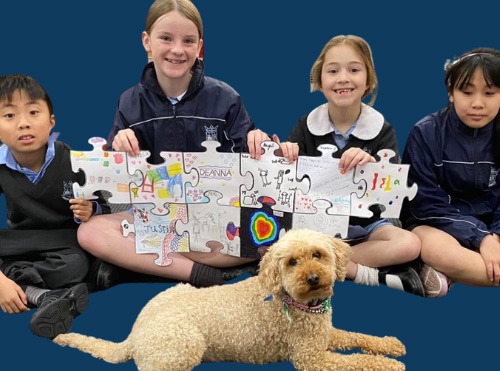
Good intentions aren’t enough: Getting therapy dog programs right in schools

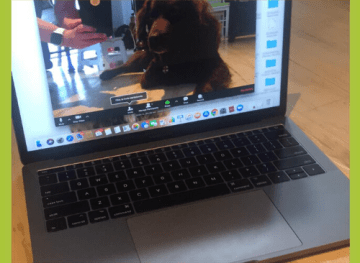
I recently had the chance to attend an online presentation from Dr Tiffani Howell (PhD in Anthrozoology), a researcher who’s spent more than 15 years studying human–animal relationships and the fast-growing world of animal-assisted services. What stood out most wasn’t just in the depth of her experience (and the sheer number of publications and commissioned reports behind it), but how practical her message was for anyone working with animals in schools, health settings, or community programs.
I met Tiffani 10 years ago, and I was impressed by her ability to see the importance of bringing research into real-world situations. Her work spans 100+ peer-reviewed publications, 20+ commissioned reports for industry, government and philanthropic organisations, and $2.5m+ in funded projects delivered on time and within budget. She’s also coordinated online CPD courses in animal-assisted services, taught in undergraduate psychology units, and supervised research students through to completion (including PhDs, Master’s, and Psychology Honours). More recently, it’s been exciting to see her stepping into new spaces, translating research into practical guidance that helps educators, service providers and decision-makers do animal-assisted work well.
As more schools explore “therapy dogs” and animal-assisted programs, Tiffani’s presentation was a timely reminder: good intentions aren’t enough. Clear definitions, strong welfare standards, and evidence-informed practice make these interactions safe, ethical, and genuinely helpful.
Over the coming weeks, Canine Comprehension will update the language we use in our communications with schools and partners to better align with industry standards and reduce confusion. One of the most useful parts of Dr Tiffani Howell’s presentation was her clear explanation of the terms we hear every day, and why they’re often used interchangeably when they shouldn’t be. When we’re precise with language, it helps everyone understand what we’re saying, what we mean, and what a service is (and isn’t) designed to do.
So, as a starting point, here are two key definitions we’ll align with and use more consistently.
Assistance animals
Assistance animals are trained to perform at least one identifiable task or behaviour to help a person with a disability. They’re trained to a high standard so they can access public spaces that are off-limits to most animals. Tiffani highlighted that access denials still occur frequently(even though they’re illegal), and how this can affect people in everyday settings such as transport, hospitality, and medical centres.
Therapy animals
Therapy animals are included in the work of a qualified health professional as part of a structured, goal-directed treatment plan. In other words, the animal is an adjunct to an existing professional modality (like psychotherapy or occupational therapy). One thing she said that stuck with us was: There is no such thing as ‘animal-assisted therapy’ in and of itself. The animal isn’t the therapy, the therapy is the therapy, and the animal supports it when used deliberately and ethically.
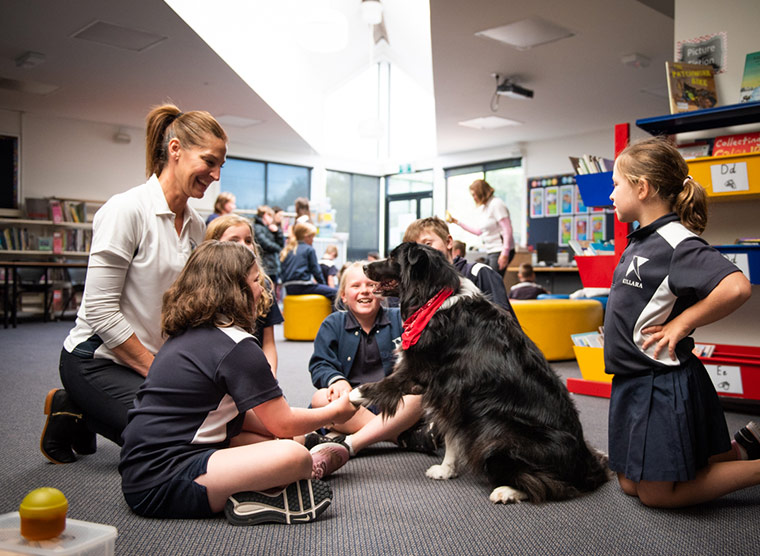
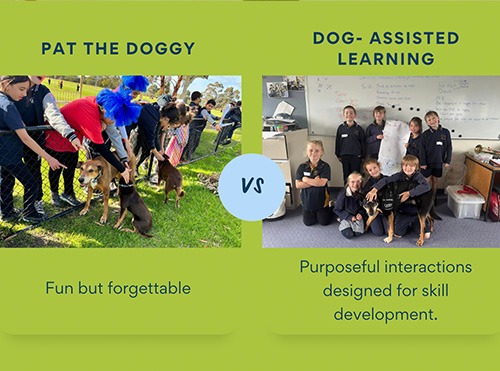
Dr Tiffani posed a question we think every school should sit with: is it enough for an animal to simply be present, or do they need to be actively integrated into the session? It’s an important distinction, because a dog in a classroom can absolutely be calming, but calm isn’t the same as learning, and comfort isn’t the same as outcomes.
At Canine Comprehension, we believe it’s essential that any dog experience in a school setting is tied to clear curriculum and well-being goals. When sessions are goal-led, everyone benefits: students know what they’re working towards, staff can see and describe the purpose, and the activities can be adjusted to suit the group’s needs while still staying on track. It also supports consistency across weeks, so the program isn’t dependent on “how the day goes” or the personality of a particular group; it’s built around intentional, evidence-informed teaching.
Just as importantly, having a clear purpose helps us protect student safety and animal welfare. When a dog is simply “in the room”, it’s easy for boundaries to blur and for the animal to be treated as entertainment or a reward. When the dog is thoughtfully integrated into structured activities, with safeguards and predictable routines, it creates a safer environment for students and a fairer, more respectful experience for the dog. In short, presence can be lovely, but purpose is what makes it ethical, consistent, and genuinely effective.
As animal-assisted programs continue to expand, Tiffani outlined several issues that are coming into sharper focus, and they’re worth paying attention to if we want this work to be safe, ethical, and genuinely effective. While the research base is growing, there are still important gaps, including small sample sizes, limited control groups, and not enough clarity about what the animal is doing in a session and why that matters. We need to continue the research to move toward better answers to practical questions, such as which populations benefit most, what “dosage” (frequency and intensity) is actually helpful, and what effective implementation looks like in real-world settings, not just in ideal conditions.
Alongside the evidence, Tiffani emphasised that animal welfare and human safety can’t be treated as optional extras. Many guidelines address welfare and safety, but the real issue is whether they’re consistently followed in practice. Welfare isn’t a “nice to have”; it’s the foundation that everything else sits on. She also highlighted the challenge of standardised protocols: multiple guidelines are in circulation, some stronger than others, and implementation varies widely. Schools and organisations often need support not just in choosing a guideline, but in translating it into day-to-day practice.
Finally, in the assistance animal space, she pointed to the need for clearer government policies, easier reporting pathways, and a nationally consistent approach to assistance animal identification, practical steps that could help reduce access denials and improve outcomes for handlers and the broader community.
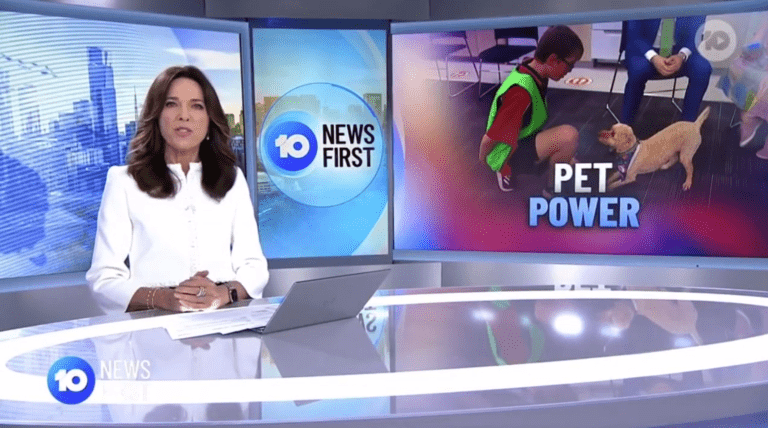
One slide that really landed for me highlighted the Victorian Government’s focus on more therapy dogs in schools, alongside work to develop guidance and professional development for animal-assisted school programs. That’s encouraging because it signals growing recognition of the role animals can play in supporting student wellbeing and engagement, but it also raises the bar for all of us. If schools are going to bring animals into learning environments, we have a responsibility to make sure these programs are implemented thoughtfully and consistently, not just enthusiastically.
For us, that means any school-based animal program must be safe and inclusive, with clear boundaries and consideration for the whole school community. It needs to be goal-led, not simply “feel-good,” so the animal’s presence connects to purposeful learning and wellbeing outcomes. It also needs backing from training and clear protocols, so staff aren’t left guessing, and the program doesn’t rely on individual confidence or experience. And above all, it must be designed with animal welfare front and centre, because ethical practice isn’t separate from effectiveness; it’s what makes effectiveness possible.
Want to learn more about Dr Tiffani Howell’s work (or follow what she’s building next)?
Website: www.drtiffanihowell.com.au
LinkedIn: www.linkedin.com/in/drtiffanihowell