Social media, anxiety and school engagement: what the research is telling us
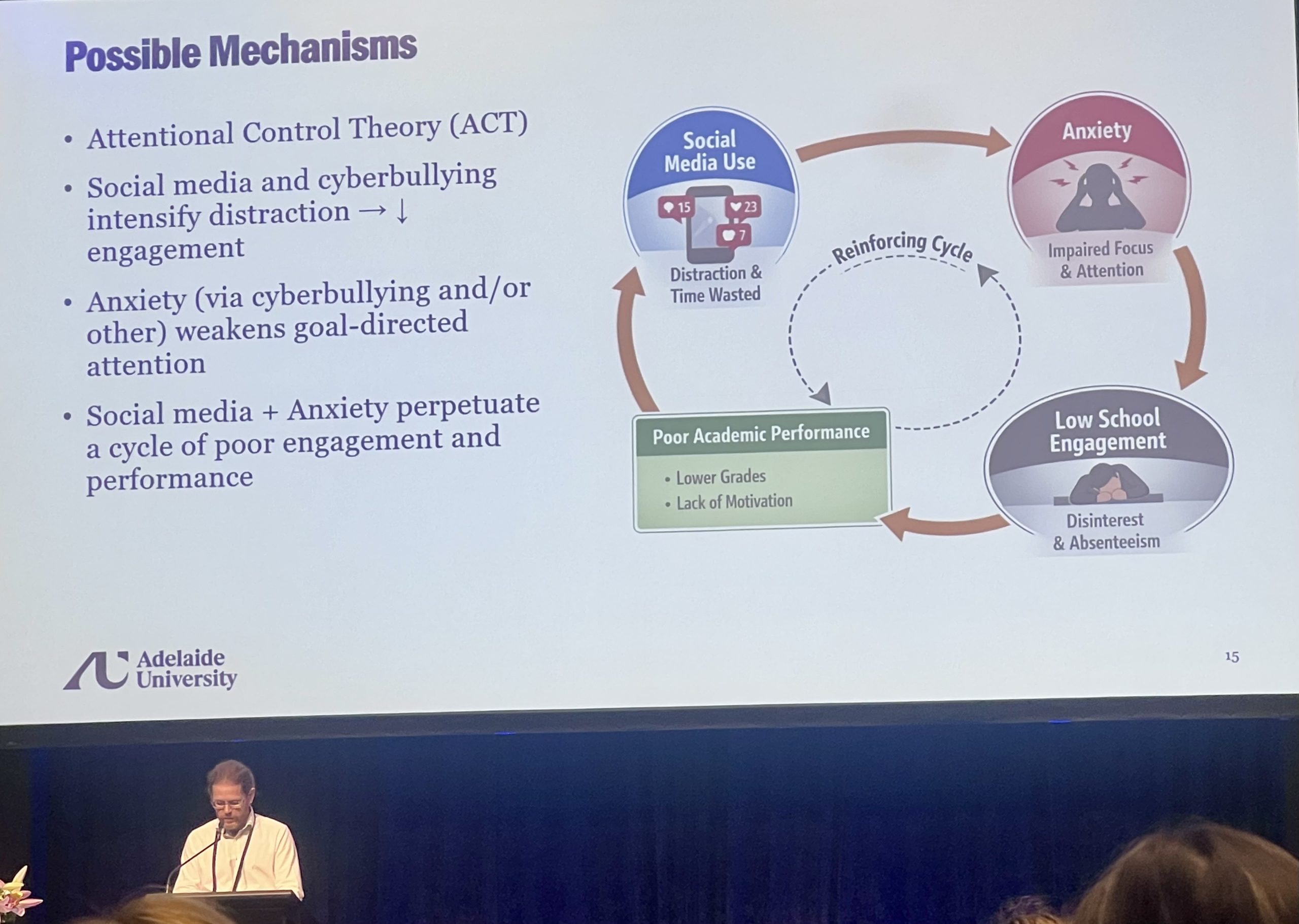
A recent presentation by Mark Kohler, with reference to his research colleagues, Danielle Rosella and Andrew Wicking from Adelaide University, shared in partnership with Resilient Youth Australia, offered an important look at the relationship between social media use, online bullying, anxiety and school engagement in adolescents.
It was a timely reminder that school engagement is about far more than attendance. It includes a student’s emotional, behavioural and cognitive involvement in school, along with the relationships and learning experiences that shape whether they feel connected, capable and motivated. When engagement drops, the effects can be significant, influencing academic achievement, emotional wellbeing and the likelihood of completing school.
The research presented showed that social media is a regular part of life for most young people, with only a small proportion reporting that they never use it. Common uses included chatting with others, watching videos or streams, gaming and sharing media. On its own, that is not surprising. What is more important is how patterns of use may interact with wellbeing and learning.
According to the findings shared, 2 to 4 hours of daily social media use increased the odds of low school engagement by 317% compared with no use, while more than 4 hours a day increased the odds by 605%. Anxiety also appeared to play a major role. The presentation reported that moderate anxiety increased the odds of low school engagement by 447%, while high anxiety increased the odds by 1117%, compared with low anxiety.
The presentation also explored possible mechanisms behind these patterns. Drawing on Attentional Control Theory, the researchers suggested that social media use and cyberbullying may intensify distraction, while anxiety can weaken goal-directed attention. In practice, this may create a reinforcing cycle: distraction affects focus, reduced focus affects engagement, lower engagement affects academic performance and motivation, and those experiences may further increase stress and anxiety.
Another important point was that the impact may deepen when multiple factors overlap. The findings suggested that combinations of higher social media use, cyberbullying and high anxiety were associated with even greater likelihood of low school engagement. This matters because it shifts the conversation away from simple explanations and towards a more complete understanding of what young people may be carrying.
For educators, caregivers and professionals working alongside children and adolescents, this research is a useful reminder to look beneath the surface. Disengagement is not always about unwillingness or lack of effort. Sometimes it reflects a more complex mix of stress, distraction, social pressure and emotional overload.
The broader message is clear: if we want to support school engagement, we need to support the whole child. That means paying attention not only to behaviour and attendance, but also to emotional safety, relationships, anxiety and the environments in which young people are trying to learn. When young people feel safe, supported and understood, they are far more likely to stay connected to school and to themselves.